Not Skills to Learn.
Competencies to Build.
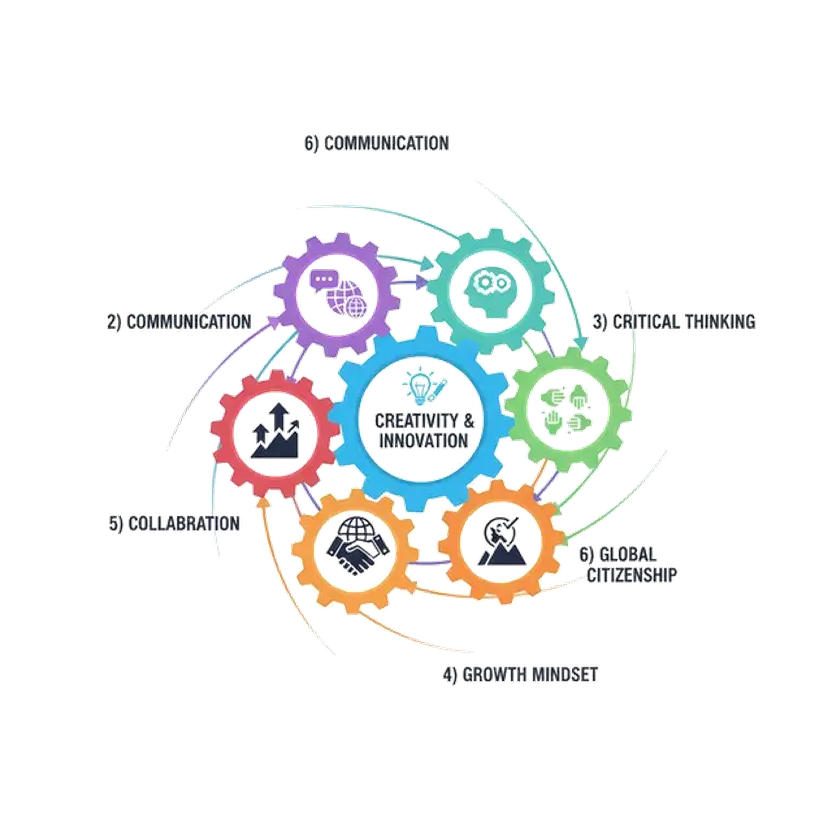
Six core competencies developed through building real ventures, not through lectures and textbooks.
Creativity
Communication
Critical
Growth
Collaboration
Global
The Lean Education Model
Competencies don't develop linearly. They spiral — deepening with each iteration of the Build-Measure-Learn cycle.
BUILD
Design and create solutions requiring creative problem-solving, team coordination, and technical decisions.
MEASURE
Analyze data, conduct user interviews, and evaluate solutions across diverse user contexts.
LEARN
Reflect on failures, integrate feedback, and decide whether to pivot or persevere as a team.
5 Thinking Methodologies
Our students don't just think one way. They dynamically flex between five distinct thinking methodologies to tackle complex, ill-defined problems.
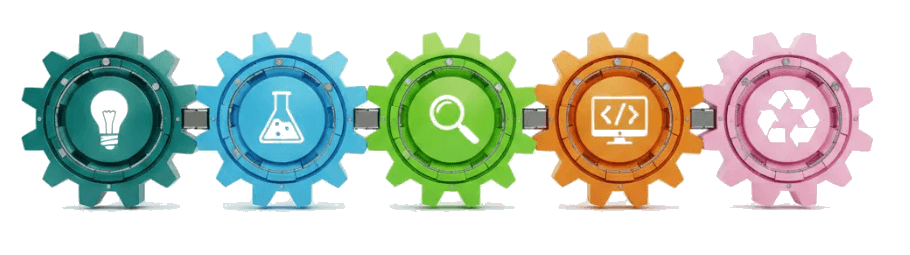
Design Thinking
Empathize, Define, Ideate, Prototype, Test
Non-linear, iterative process to understand users, challenge assumptions, and redefine problems to identify alternative strategies and solutions.
Scientific Thinking
Observe, Hypothesize, Test, Experiment, Conclude
Self-directed, self-monitored systematic process for evidence-based problem solving and hypothesis testing.
Research-Based Thinking
Inquire, Investigate, Analyze, Synthesize
Inquiry-driven, domain-specific approach focused on knowledge construction and production through rigorous research.
Computational Thinking
Decompose, Abstract, Recognize Patterns, Automate
Problem decomposition and pattern recognition — breaking complex challenges into solvable components through logical operations.
Convergent | Divergent
Explore widely, then focus precisely
Dynamic switching between divergent thinking (multiple creative solutions) and convergent thinking (selecting the optimal answer).
The Spiral Competency Model
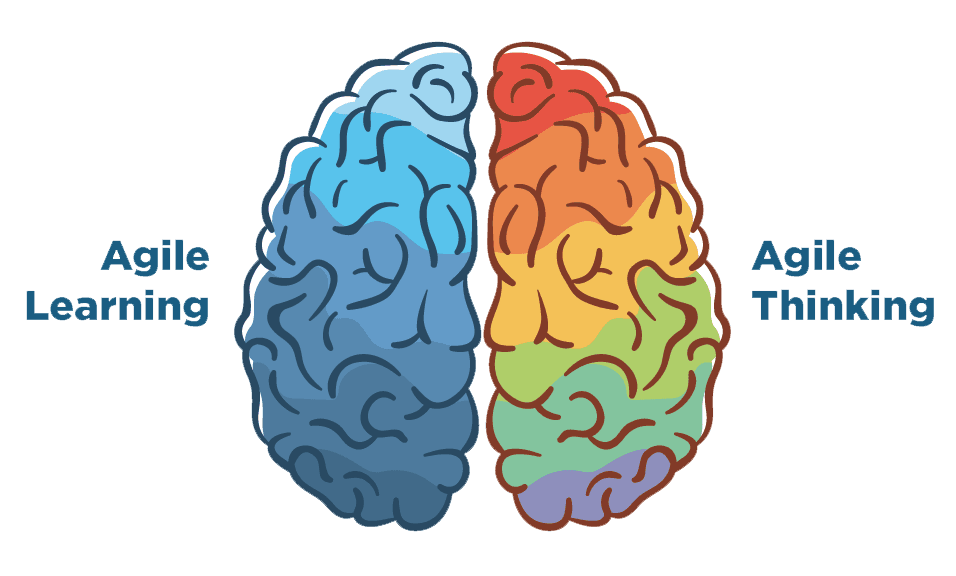
Traditional education teaches skills — discrete abilities that become obsolete. We develop competencies — adaptive capacities that evolve with you.
An agile learner flexes between mental models, applies frameworks across domains, and generates knowledge when facing unknown challenges. These six competencies form the foundation of entrepreneurial thinking.
Our spiral model is aligned with the Ontario Ministry of Education's global competencies framework and designed to plug into any national curriculum — making BCI's approach internationally portable.
Creativity & Innovation
Generate novel ideas, challenge assumptions, and create original solutions to complex problems.
Demonstrates curiosity, design thinking, imagination, and solution-focused thinking to solve complex problems and pursue new ideas.
"Innovation distinguishes between a leader and a follower."
— Steve Jobs
Core Skills
Real-World Application
How this competency shows up when building actual ventures:
Developed Through Doing
You don't learn creativity & innovation from a textbook. You develop it by shipping products, talking to users, iterating based on data, and solving real problems with real consequences.
Communication
Express ideas clearly, listen actively, and collaborate effectively across diverse teams and audiences.
Fluent communication in native language with strong information literacy, digital fluency, and the ability to communicate across cultures and platforms.
"The single biggest problem in communication is the illusion that it has taken place."
— George Bernard Shaw
Core Skills
Real-World Application
How this competency shows up when building actual ventures:
Developed Through Doing
You don't learn communication from a textbook. You develop it by shipping products, talking to users, iterating based on data, and solving real problems with real consequences.
Critical Thinking
Analyze information objectively, evaluate evidence, and make reasoned decisions based on data.
Acquire, process, interpret, and analyze information; apply divergent and convergent thinking to solve meaningful, real-life complex problems.
"It is the mark of an educated mind to be able to entertain a thought without accepting it."
— Aristotle
Core Skills
Real-World Application
How this competency shows up when building actual ventures:
Developed Through Doing
You don't learn critical thinking from a textbook. You develop it by shipping products, talking to users, iterating based on data, and solving real problems with real consequences.
Growth Mindset
Embrace challenges, persist through setbacks, and view failure as a learning opportunity.
Take initiative, demonstrate persistence and motivation, employ higher-order thinking skills, and dynamically switch between thinking processes.
"I have not failed. I've just found 10,000 ways that won't work."
— Thomas Edison
Core Skills
Real-World Application
How this competency shows up when building actual ventures:
Developed Through Doing
You don't learn growth mindset from a textbook. You develop it by shipping products, talking to users, iterating based on data, and solving real problems with real consequences.
Collaboration
Work effectively in teams, leverage diverse perspectives, and build on others' ideas.
Developed interpersonal and social skills, cooperation, accountability, responsibility in leading teams with empathy and entrepreneurial spirit.
"Alone we can do so little; together we can do so much."
— Helen Keller
Core Skills
Real-World Application
How this competency shows up when building actual ventures:
Developed Through Doing
You don't learn collaboration from a textbook. You develop it by shipping products, talking to users, iterating based on data, and solving real problems with real consequences.
Global Citizenship
Understand global contexts, appreciate diverse perspectives, and create solutions with positive social impact.
Global perspective on life and work, ethical behavior, cultural awareness, intercultural understanding, and environmental responsibility.
"Be the change you wish to see in the world."
— Mahatma Gandhi
Core Skills
Real-World Application
How this competency shows up when building actual ventures:
Developed Through Doing
You don't learn global citizenship from a textbook. You develop it by shipping products, talking to users, iterating based on data, and solving real problems with real consequences.
How We Assess Competencies
No multiple-choice tests. No letter grades. Real assessment of real work.
Shipped Products
Did you launch? Do users exist? Is it live?
Validated Learning
What hypotheses did you test? What did you learn?
Team Contributions
How did you collaborate? What did you enable?
Portfolio Evidence
Show your work. Code, designs, metrics, reflections.
Your Venture Is Your Resume
When you graduate, you don't show colleges or employers a transcript with As and Bs. You show them a live product, real users, actual revenue, and a portfolio of validated learning. That's the difference between knowing about entrepreneurship and being an entrepreneur.
Ready to Build These Competencies?
Stop learning about them. Start developing them by building real ventures.