Build → Measure → Learn Isn't Just a Startup Framework. It's the Best Learning Theory We Have.
Build → Measure → Learn Isn't Just a Startup Framework. It's the Best Learning Theory We Have.
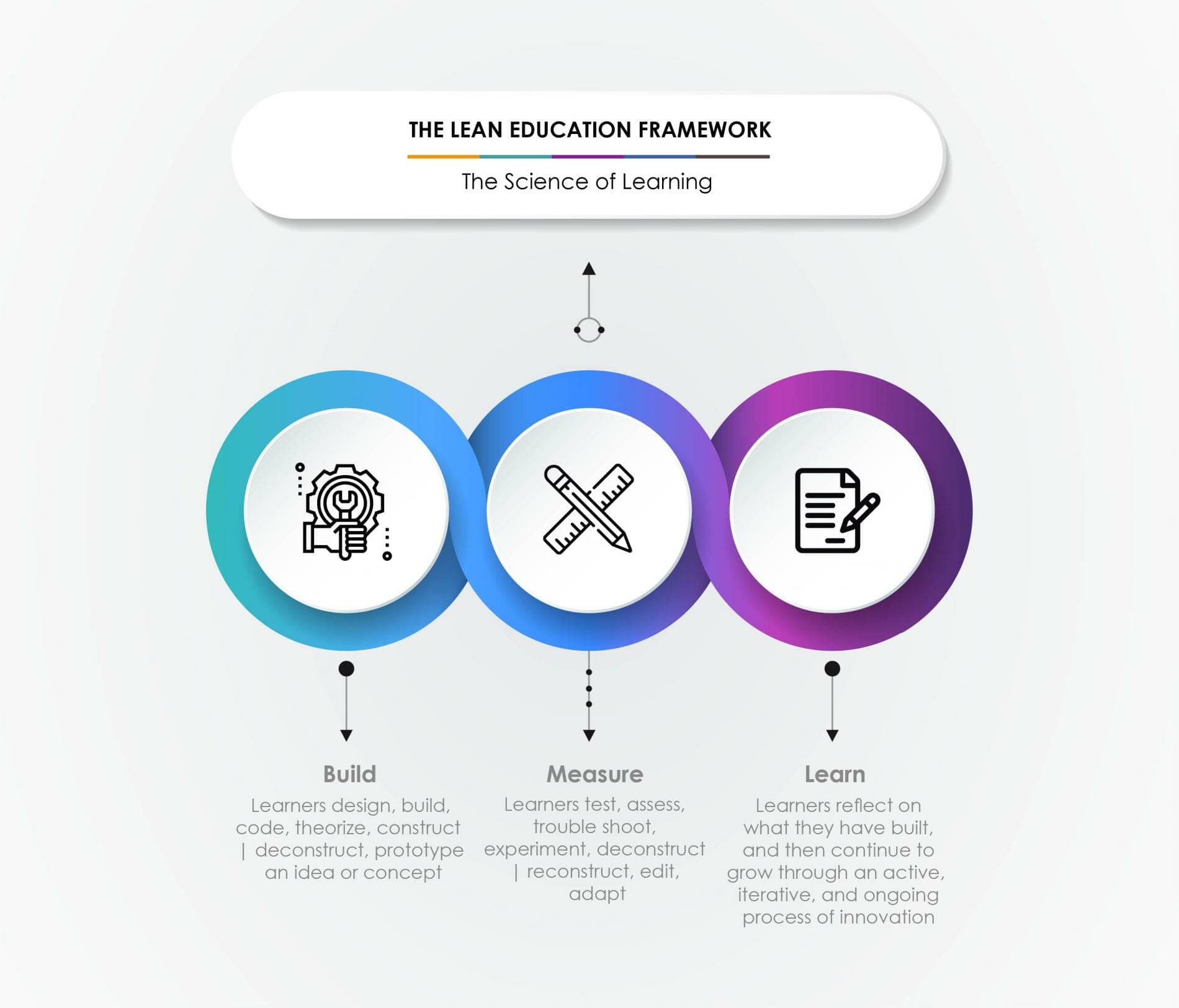
Eric Ries published The Lean Startup in 2011. In it, he introduced a deceptively simple loop: Build → Measure → Learn. Build a minimum viable product. Measure how customers respond. Learn what to do next. Repeat.
It changed how companies build software. At BCI Innovation Labs, we think it changes how humans should be educated.
The Problem with Traditional Learning Loops
Traditional education has a learning loop too. It goes like this:
Receive → Memorize → Test → Forget
The problem isn't the loop itself. It's that the measurement is disconnected from reality. A test score tells you almost nothing about whether you can actually do anything useful with the knowledge. It tells you whether you could recall it under timed pressure, in a decontextualized environment, on a specific day.
That's a proxy for learning. A bad one.
What the Lean Loop Does Differently
The lean startup loop measures reality. Did customers buy? Did they come back? Did the thing you built solve the problem you hypothesized it would solve?
That feedback is brutal, honest, and immediate. You can't argue with a customer who doesn't convert. You can argue with a rubric.
When we apply this to education:
Build — Students create something real. A product, a service, a piece of content, a solution to an actual problem. Not a simulation.
Measure — They expose it to real audiences. Real users, real feedback, real market signals. Not a teacher grading a rubric.
Learn — They update their model of the world based on what happened. Not what they were told would happen.
The loop is self-correcting. It keeps running. It never produces a final grade — it produces a next action.
Why This Is Harder Than It Sounds
Running the lean loop in education requires abandoning a few cherished assumptions.
You have to allow failure. Real experiments fail. Products don't get traction. Events fall flat. If every project must succeed to preserve the grade, you're not running a lean loop — you're running an expensive simulation.
You have to allow divergence. Not every student will build the same thing. Not every iteration will look like what you expected. Standardization is the enemy of the lean loop.
You need real stakes. The measurement step only works if there are real consequences — real customers, real feedback, real accountability to someone other than the teacher. This is why BCI co-founds actual ventures rather than running simulated business cases.
You need shorter cycles. The traditional semester is the wrong unit of time for feedback. The lean loop runs in days or weeks, not four months.
What We've Learned
At BCI, we've been running this model with students and entrepreneurs for several years. A few things we've found:
Intrinsic motivation is not a personality trait — it's a condition. Students who "don't care" about school often care deeply about their business, their product, or their audience. The difference is real stakes.
Learning sticks when it solves a real problem. Accounting becomes interesting when it's your accounts. Marketing becomes engaging when it's your brand. The context makes the content matter.
Failure tolerance increases with iteration. Students who have shipped and failed a few times stop treating failure as a verdict. They start treating it as data. This is one of the most important mindset shifts we observe.
The hardest part is letting go of control. Educators who try to run lean loops while maintaining tight rubrics, predetermined outcomes, and standardized timelines find themselves frustrated. The framework only works if you trust the process.
The Broader Implication
We live in a world where information is free, AI can handle most procedural tasks, and the skills that create economic value are judgment, creativity, and the ability to act under uncertainty.
The lean loop develops all three. The traditional education loop develops none of them.
This isn't a critique of teachers. Most teachers are working inside a system that makes the lean loop nearly impossible. But it is an argument for building alternatives — and for why BCI exists.
The world needs more outliers who can build, measure, and learn their way to something that matters.
BCI Innovation Labs runs the lean education framework with students and entrepreneurs across Canada and the UK. We're always looking for the next cohort of builders. Learn more.
Mark Weyers Ed.D
Founder of BCI Innovation Labs. Ed.D researcher focused on educational innovation, AI integration, and building companies that matter.
Related Articles

Build something that matters.
BCI Innovation Labs co-founds real ventures with students and entrepreneurs. If this resonates, we want to meet you.
Get in touch →